
Pathway: Mentorship Hub

My Role
- Led end-to-end UX research and created a Customer Journey Map
- Translated insights into a clearer, scalable system architecture
- Reframed the product around real-life scenarios and simplified core flows
- Designed role-based interfaces aligned with decision logic
- Presented prototypes, aligned stakeholders, and iterated based on feedback
- Supported implementation to ensure design consistency
Task and Where It Started
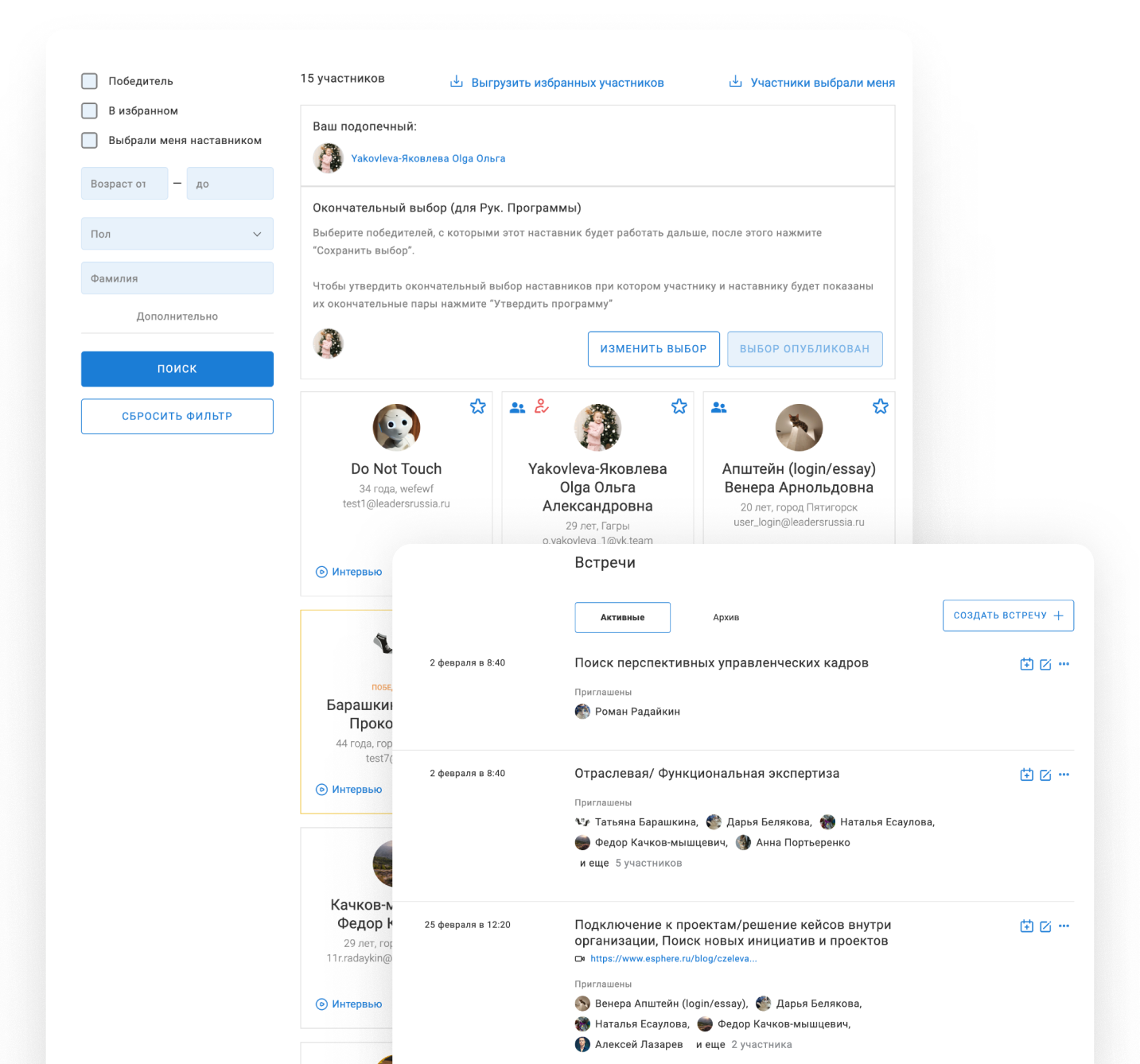
I was asked to audit an internal tool and suggest improvements. The issue wasn’t visual — the product lacked a clearly defined process and role model.
The audit surfaced deeper structural issues across three levels:
- Product: Who is the primary user? What is the core value?
- UX: Are roles and decision logic clearly reflected?
- Interaction: Are states and transitions predictable?
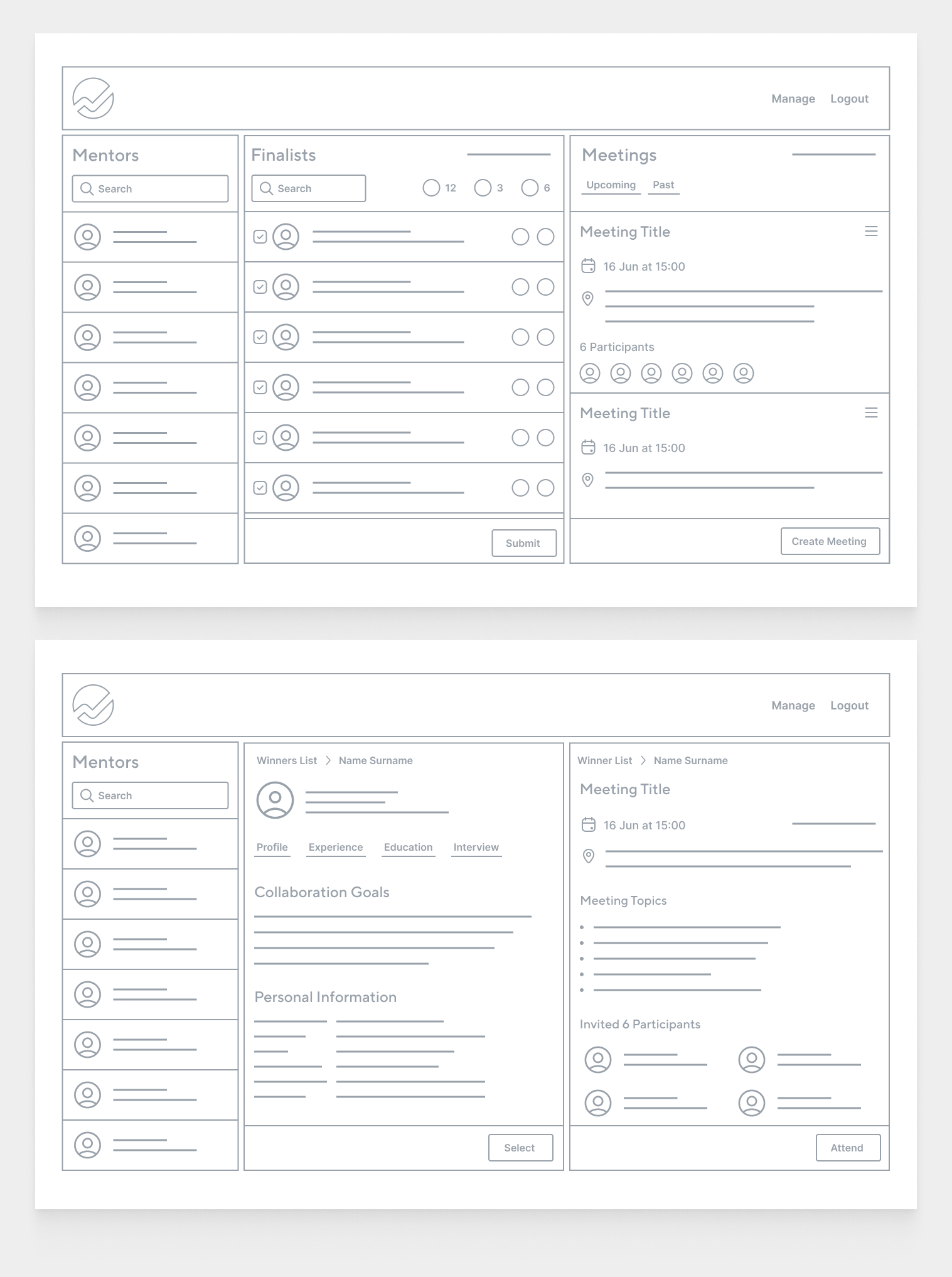
I proposed clearer role separation and suggested conducting user interviews. What started as one interview evolved into a full research phase.
Research & Discovery
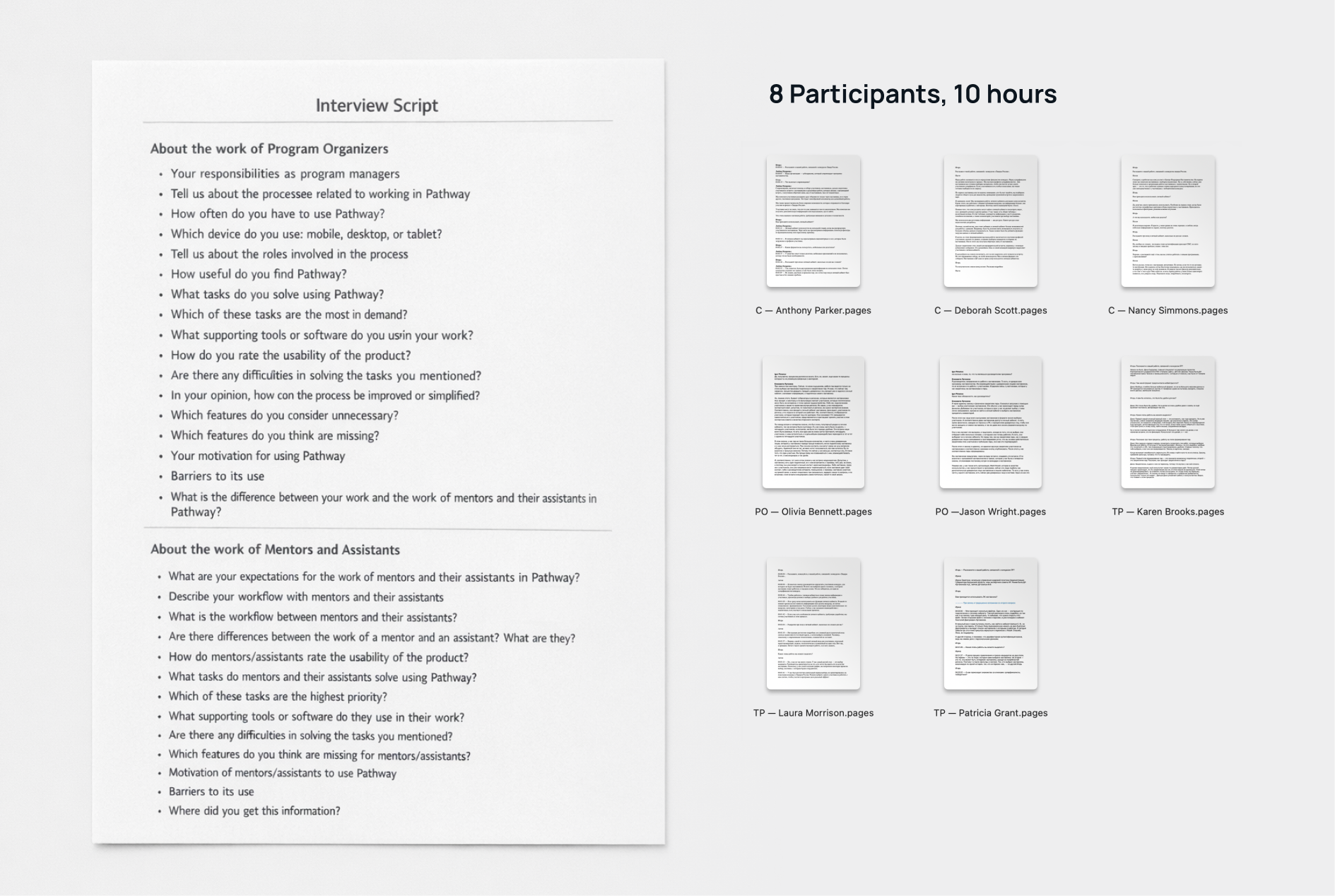
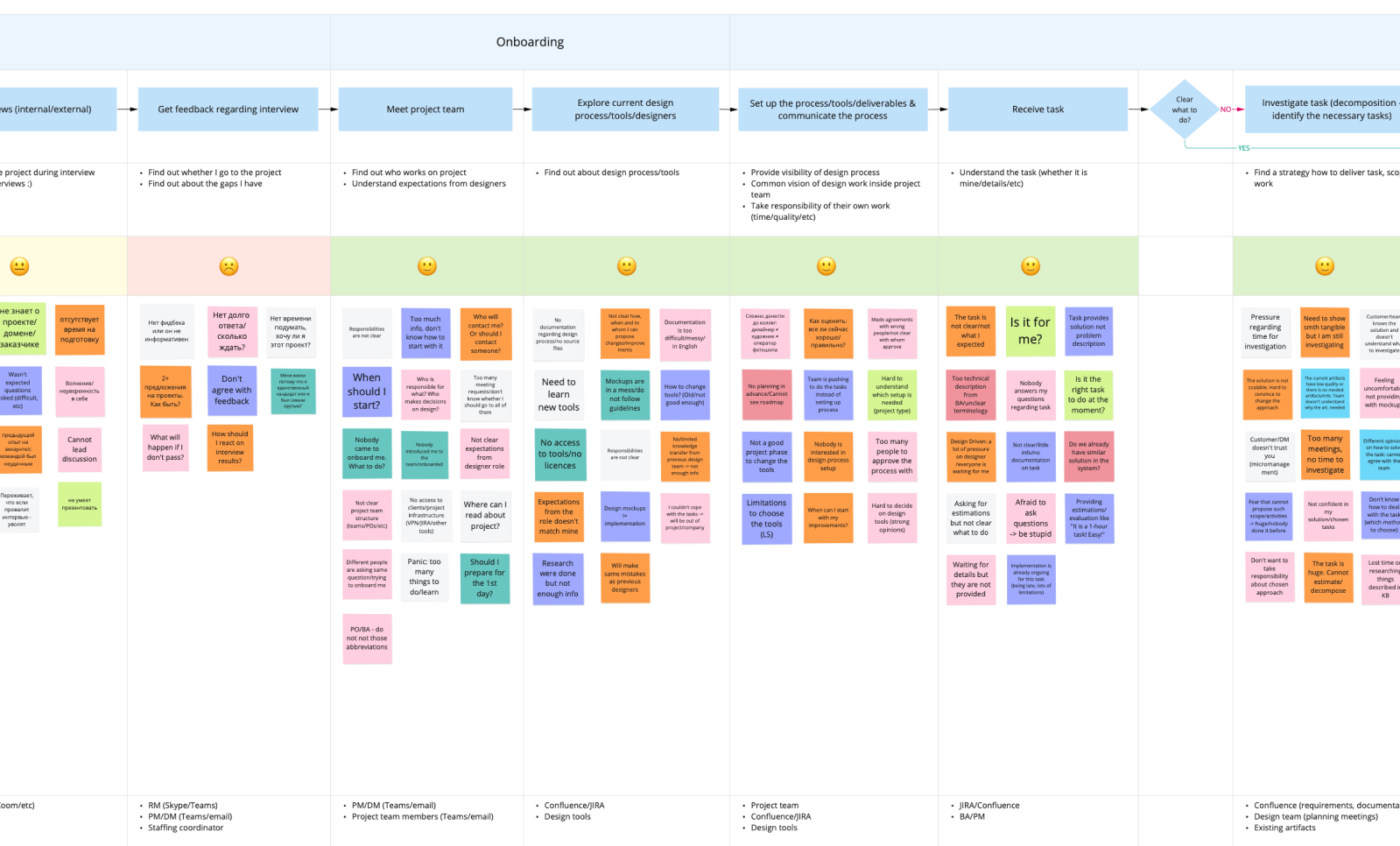
I conducted interviews with HR Consultants, Trusted Persons, and Program Managers, focusing on real workflows and decision-making. The resulting CJM exposed structural gaps in the approval flow.
Key Insights:
- ~40% of features were unused
- The mobile version had no real usage
- The HR Consultant role lacked clear definition
- Authentication friction blocked adoption
- The interface was not role-aware
Reframing the Core Problem
Pathway was not a participant directory — it was a group formation and approval system. I redefined the product around: clearly structured roles, decision points, status logic, approval and revision cycles.

This model became the foundation of the interface architecture.
Prototyping & Validation
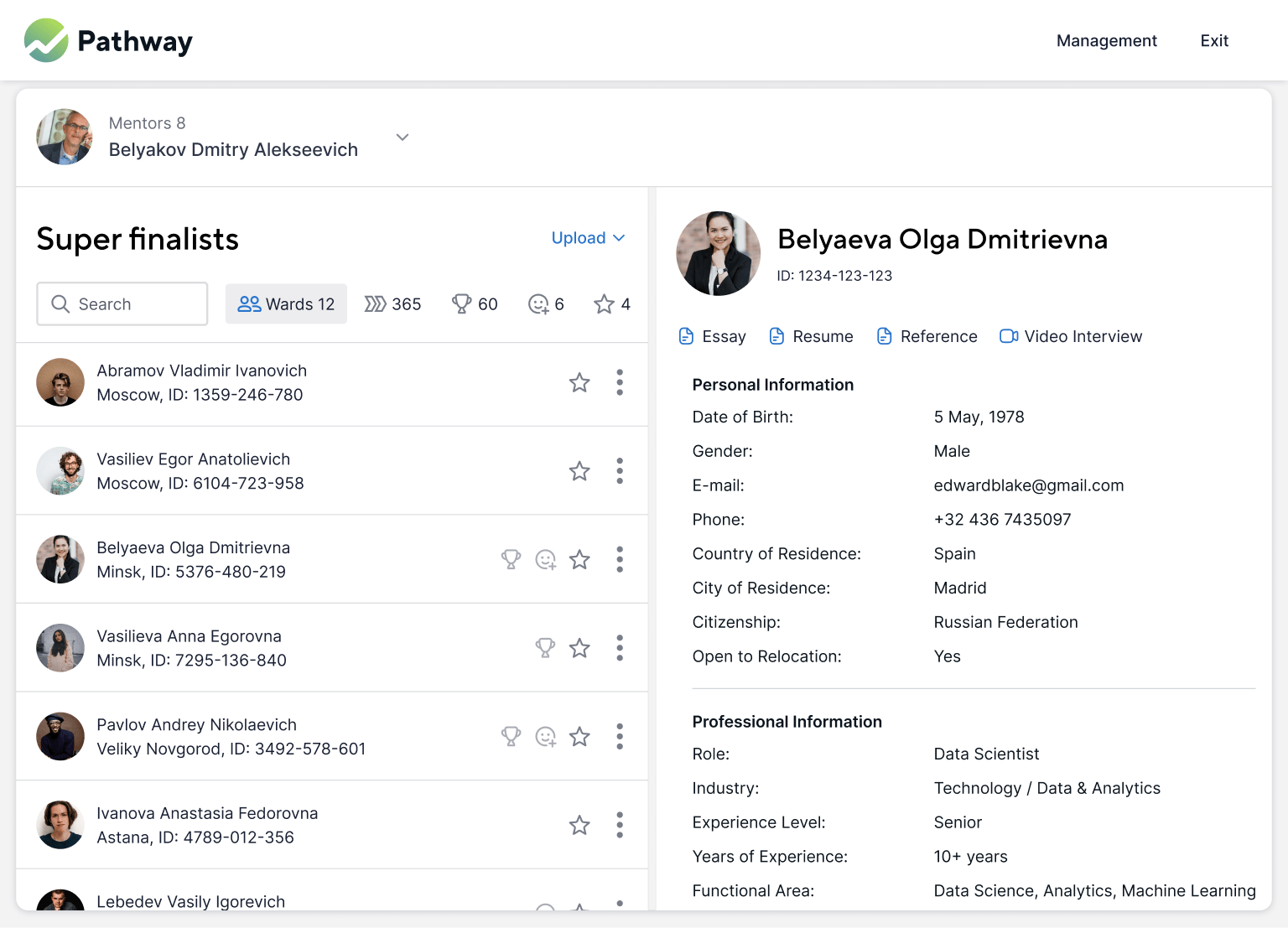
I translated the new process into an interactive prototype to validate: role separation, status transitions, group formation logic, filtering mechanics. After stakeholder walkthroughs and feedback, I refined the structure and moved into detailed UI design.
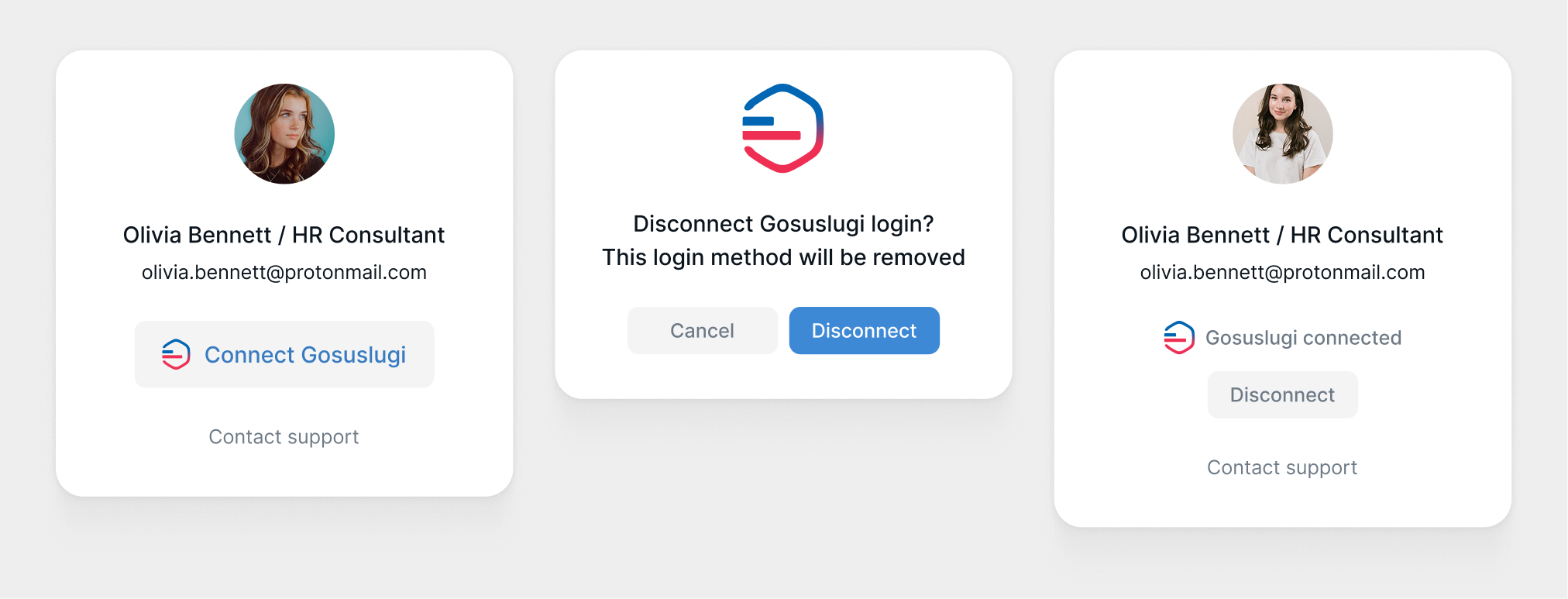
Authentication & Entry Friction
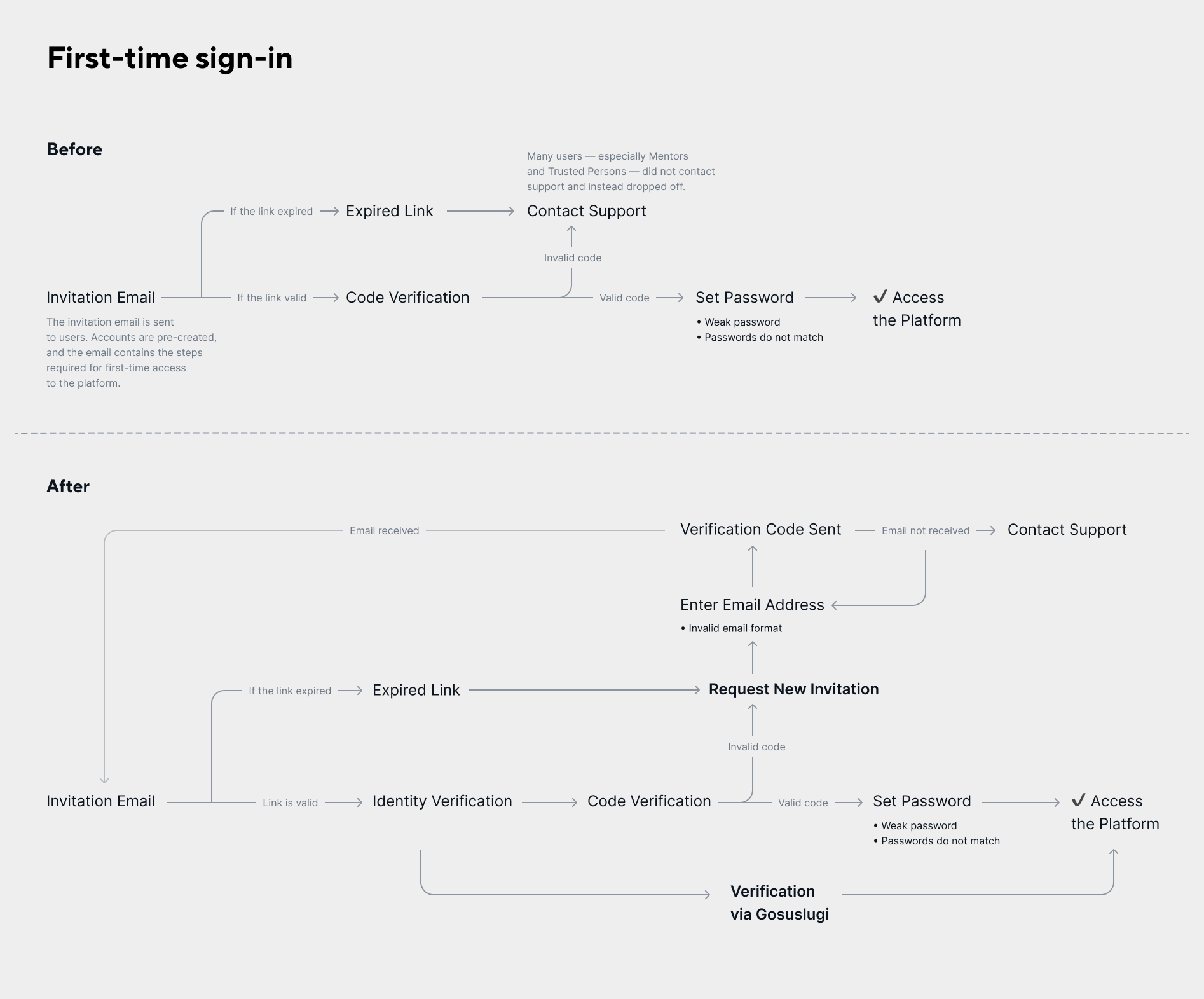
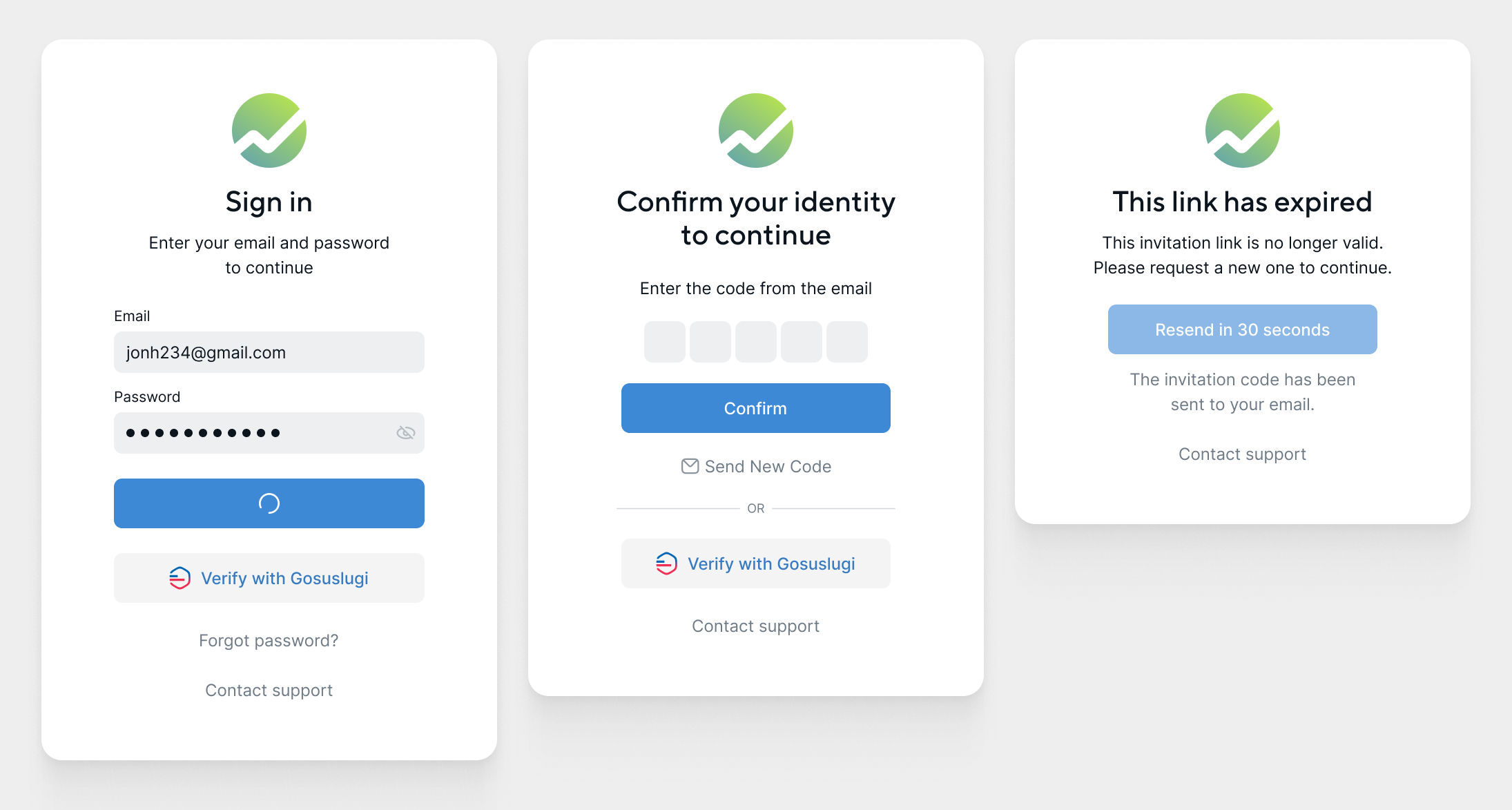
Authentication was a key friction point. Users relied on an static invitation code, which caused confusion.
I redesigned the flow by:
- Introducing Gosuslugi account linking
- Replacing static codes with dynamic email verification
- This aligned authentication with standard patterns and reduced entry friction
Role-Based Interfaces
After redefining the core process, the interface was rebuilt around clearly separated roles. Each role received its own context, permissions, and tools aligned with real responsibilities. This shift reduced ambiguity, clarified ownership, and made the system predictable at every step.
Program Manager
Final approval / Status visibility / Control over revisions
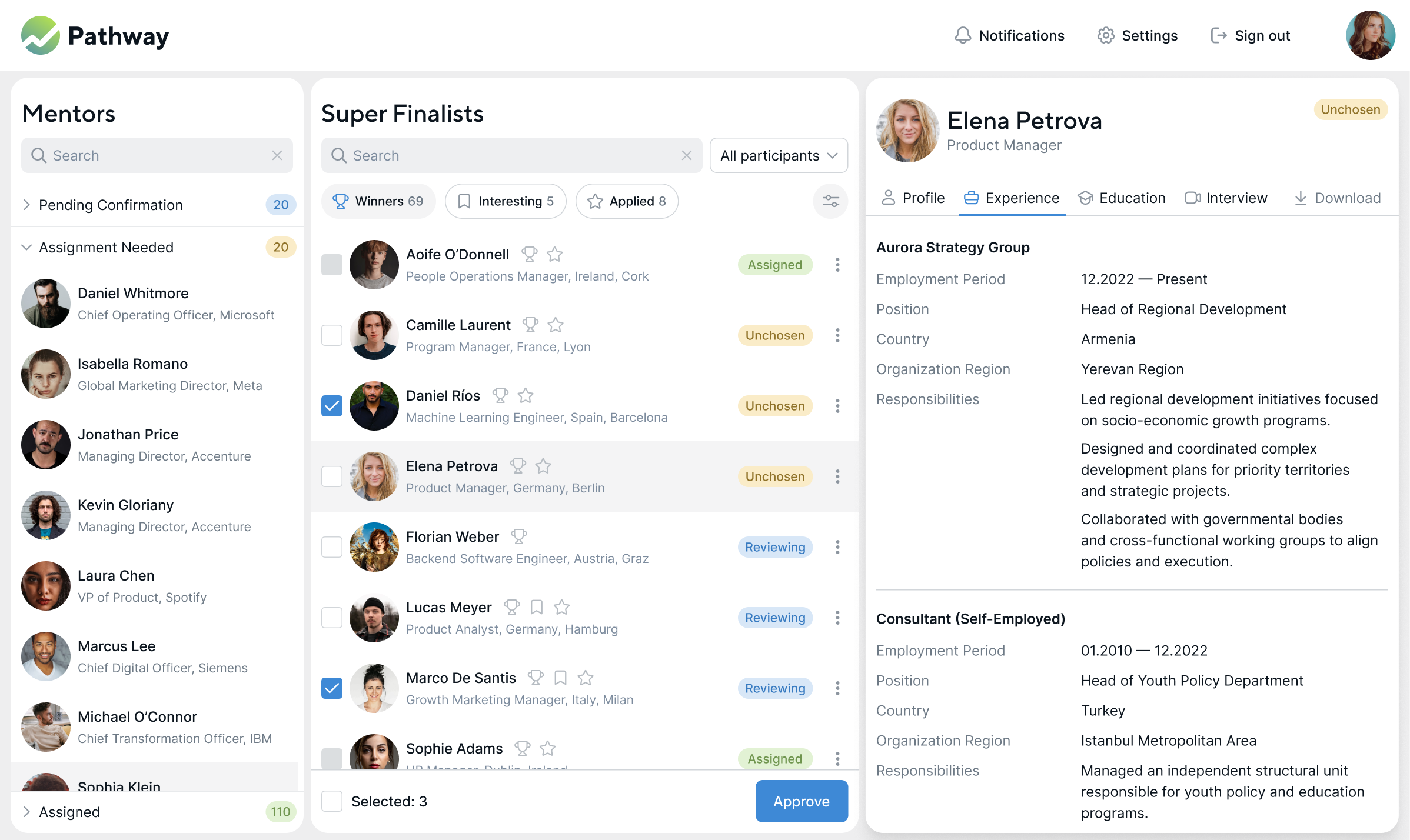
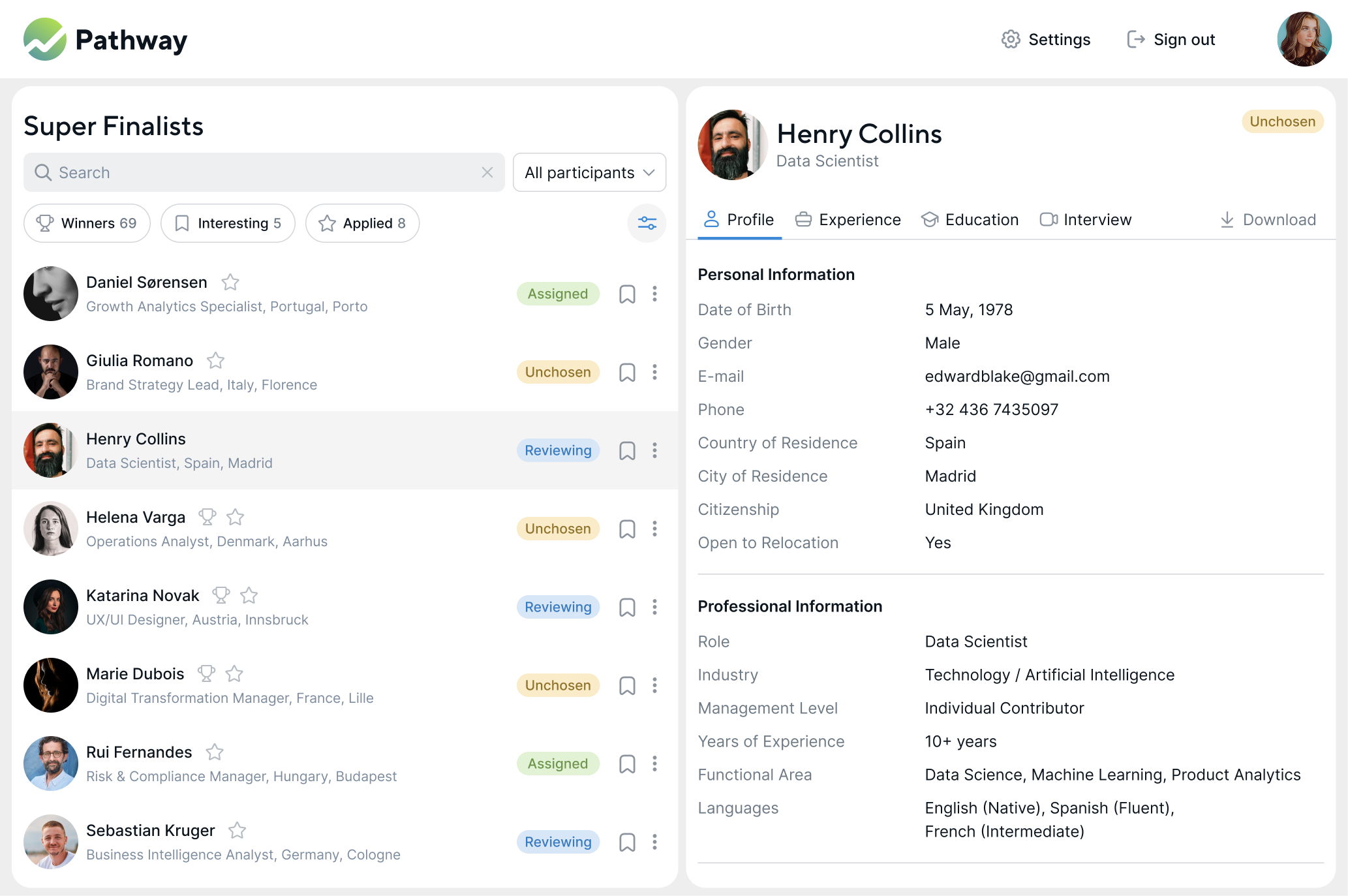
HR Consultant
Participant filtering / Group formation / Submission for approval
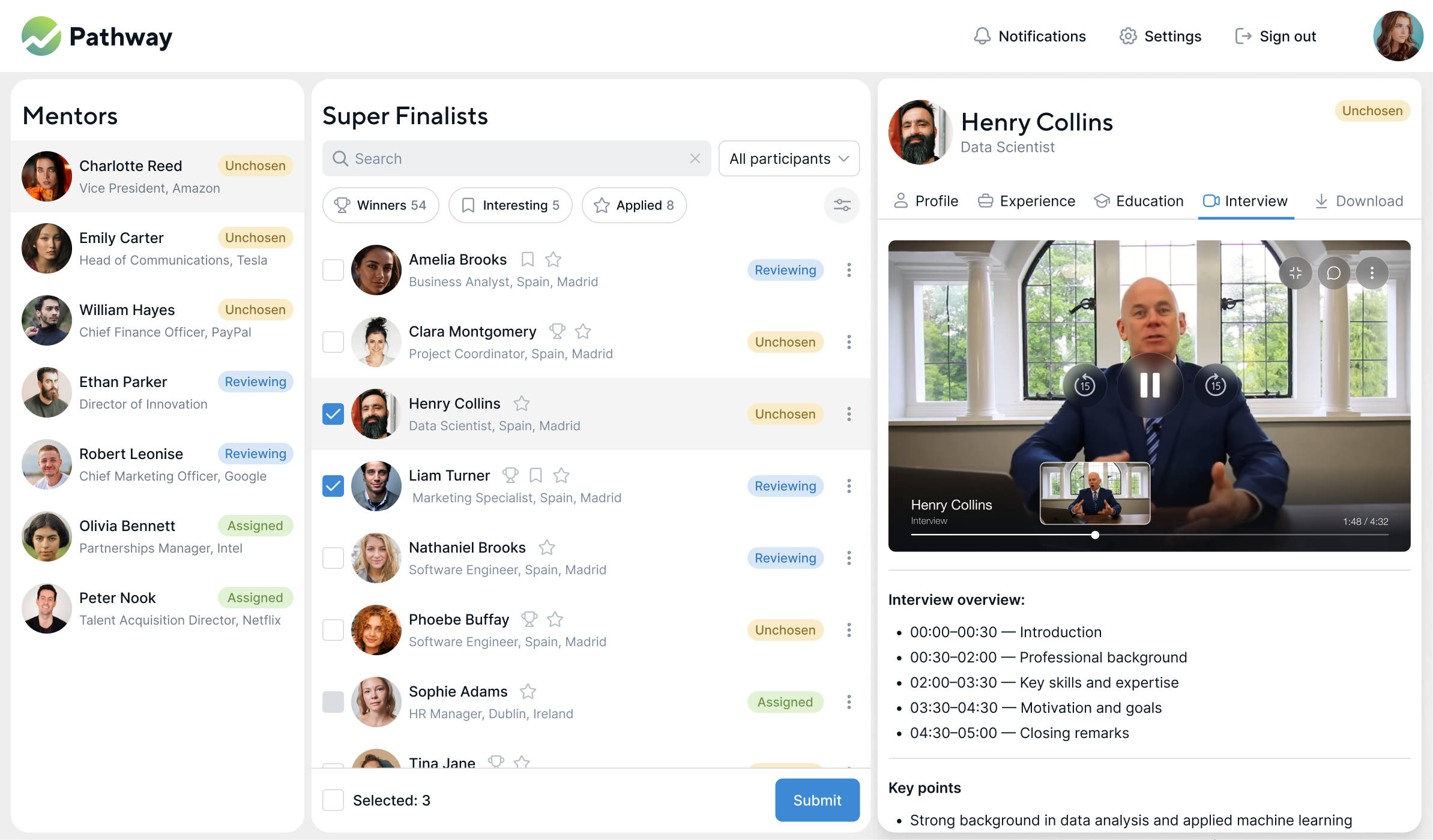
Mentor & Trusted Person
Review assigned participants / Indicate interest
Filtering & Participant Selection
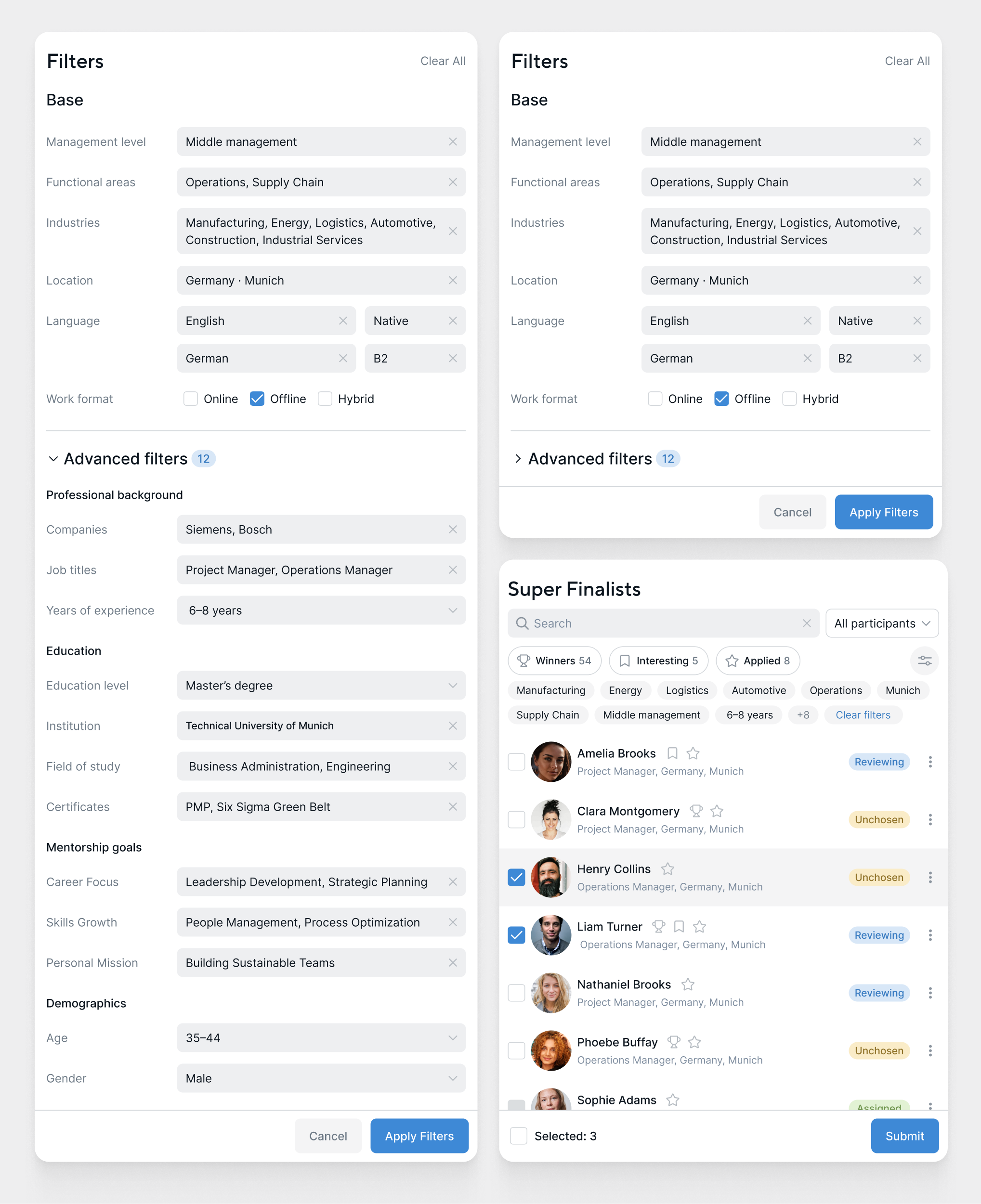
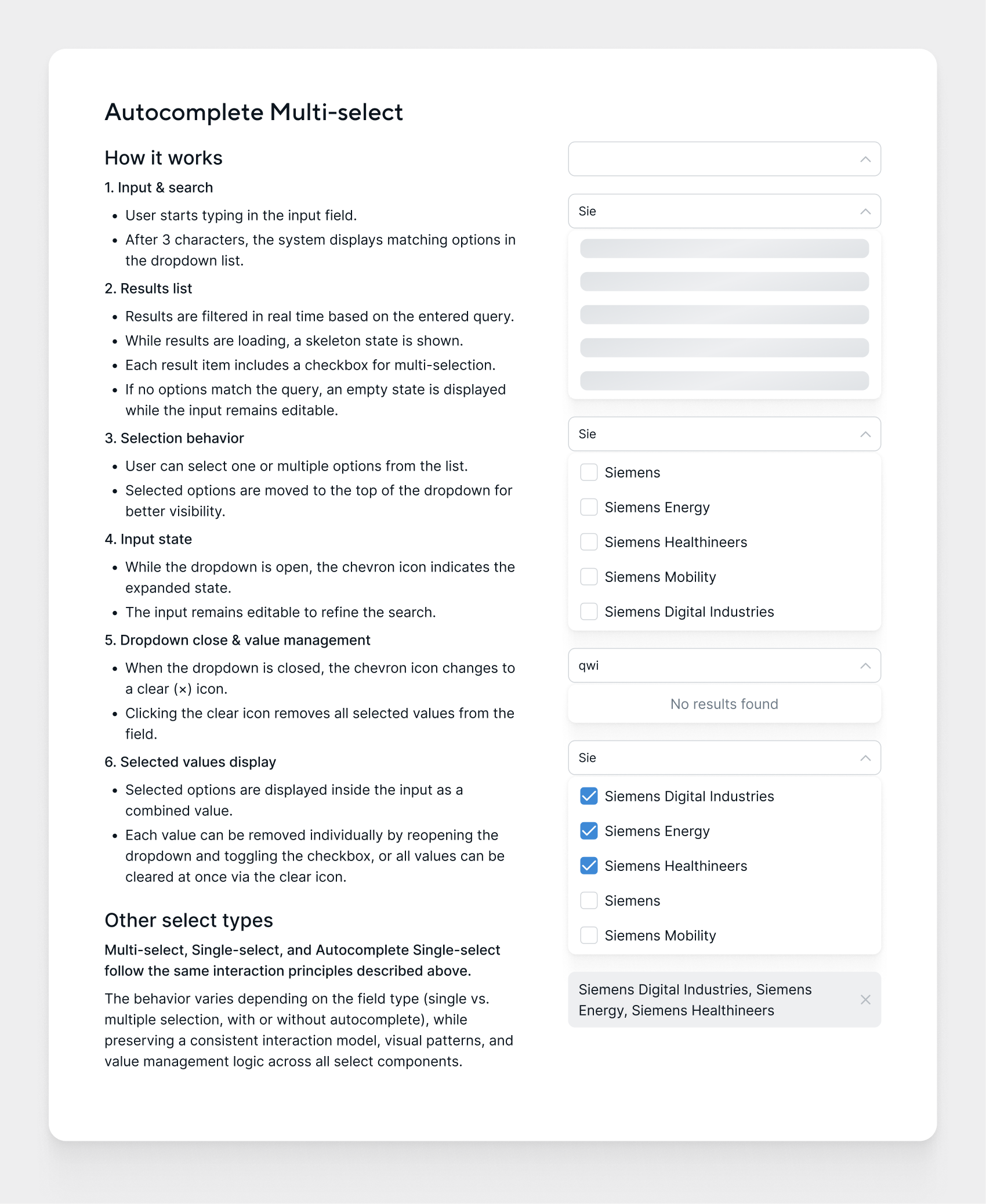
Participant selection is central to group quality. I restructured filtering into a decision-support layer:
- Base and Advanced filters
- Real selection logic (level, industry, function, goals)
- Multi-select and autocomplete
- Active filter chips for transparency
Filtering evolved from a static form into a structured selection tool
Participant Profiles
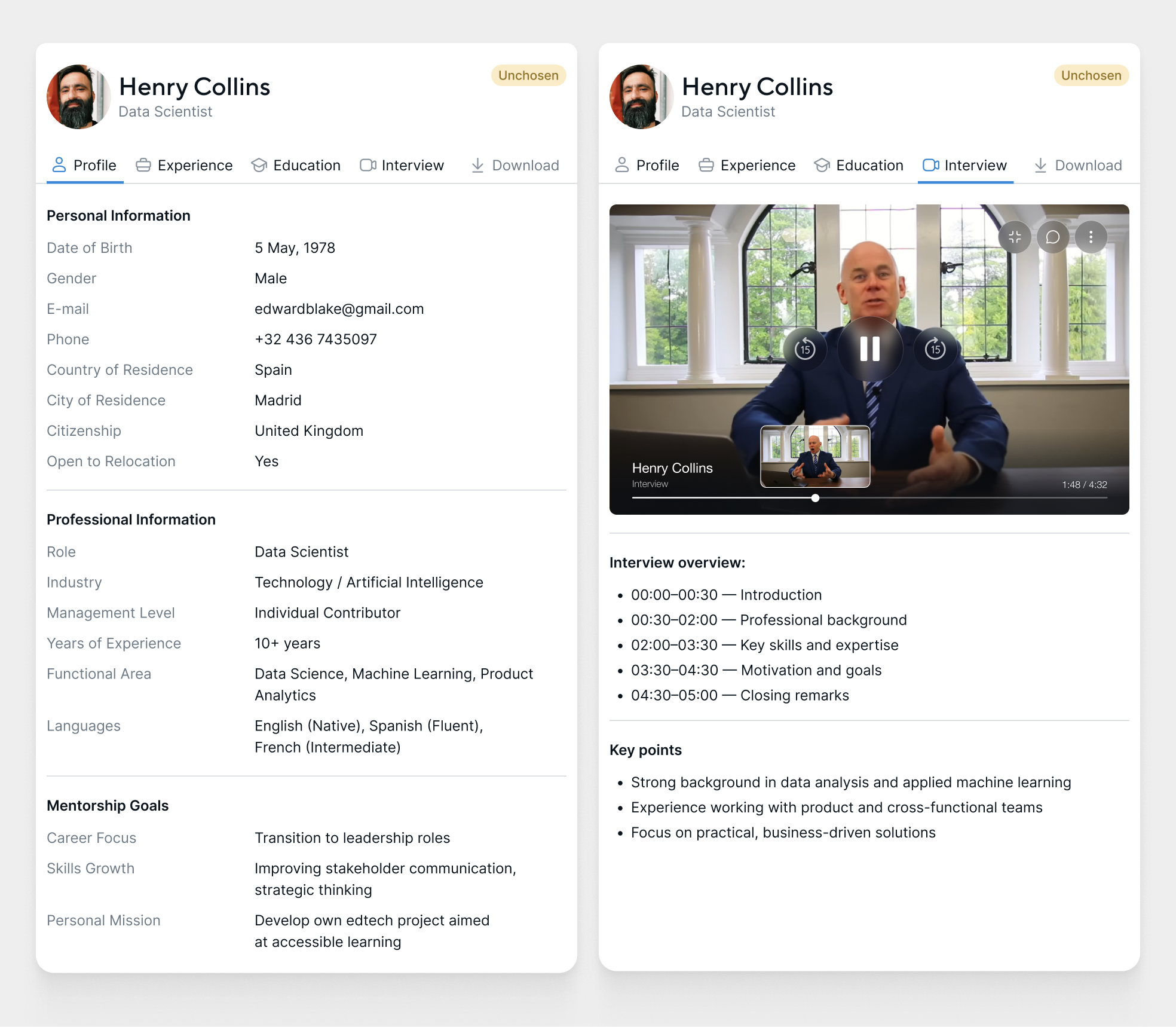
Participant profiles were redesigned to support evaluation and comparison — not just information display. I structured them into clear, navigable sections aligned with real assessment patterns.
Edge Scenarios
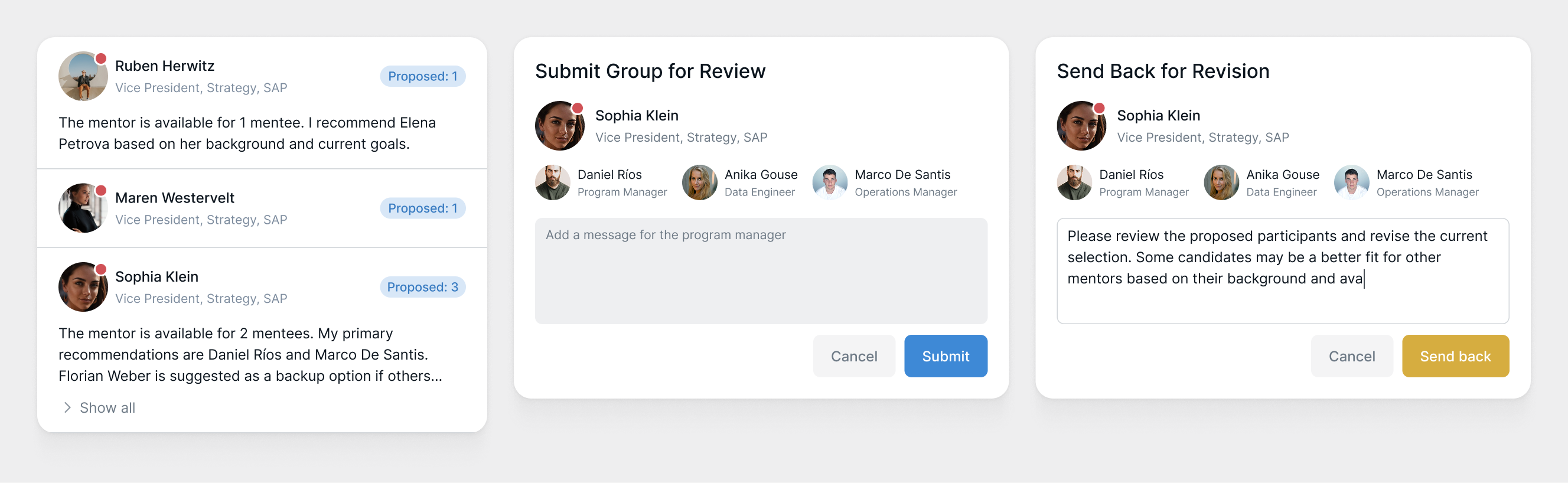
Secondary interactions were refined to align with the approval process and ensure system consistency.
Design System
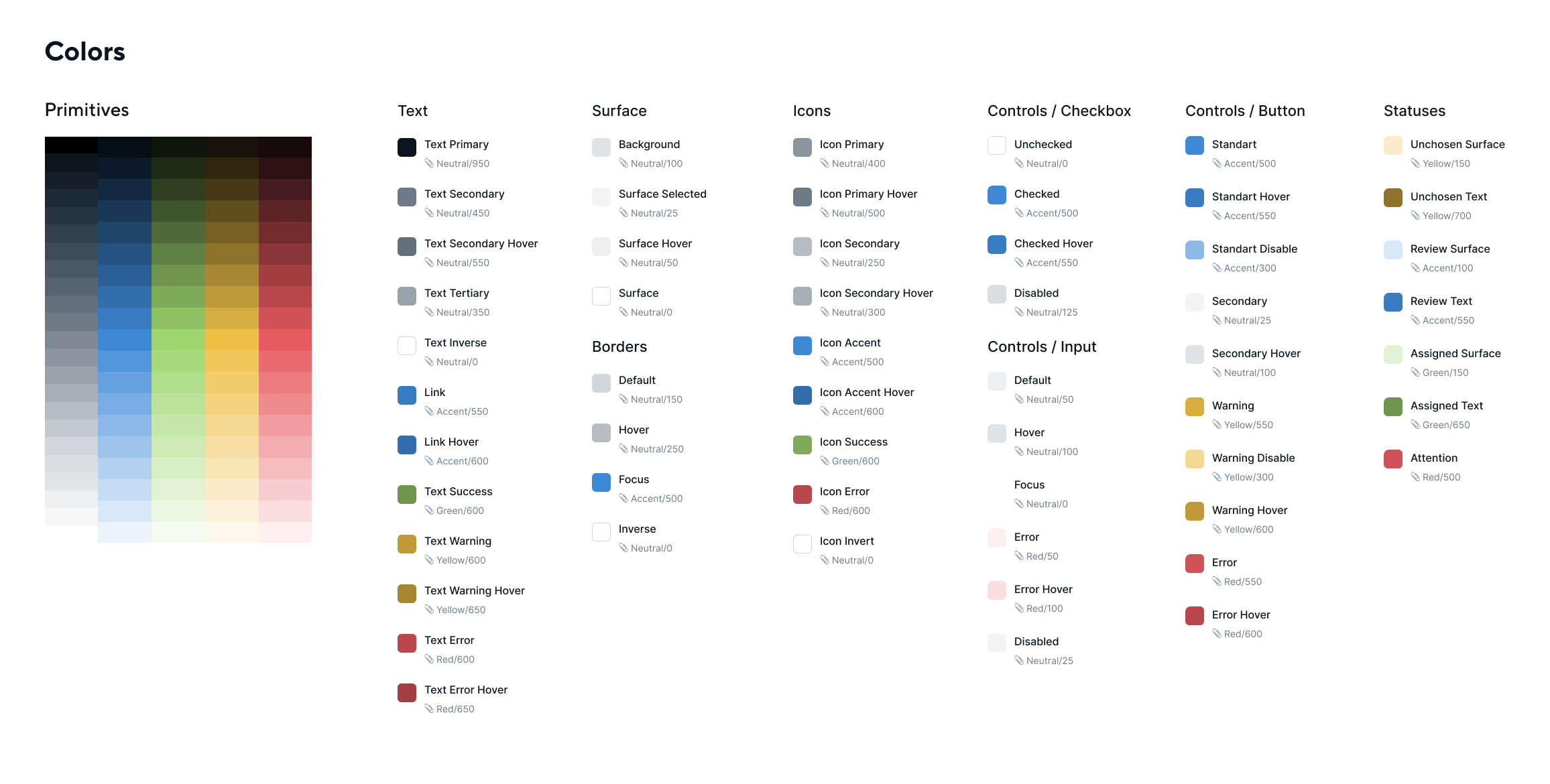
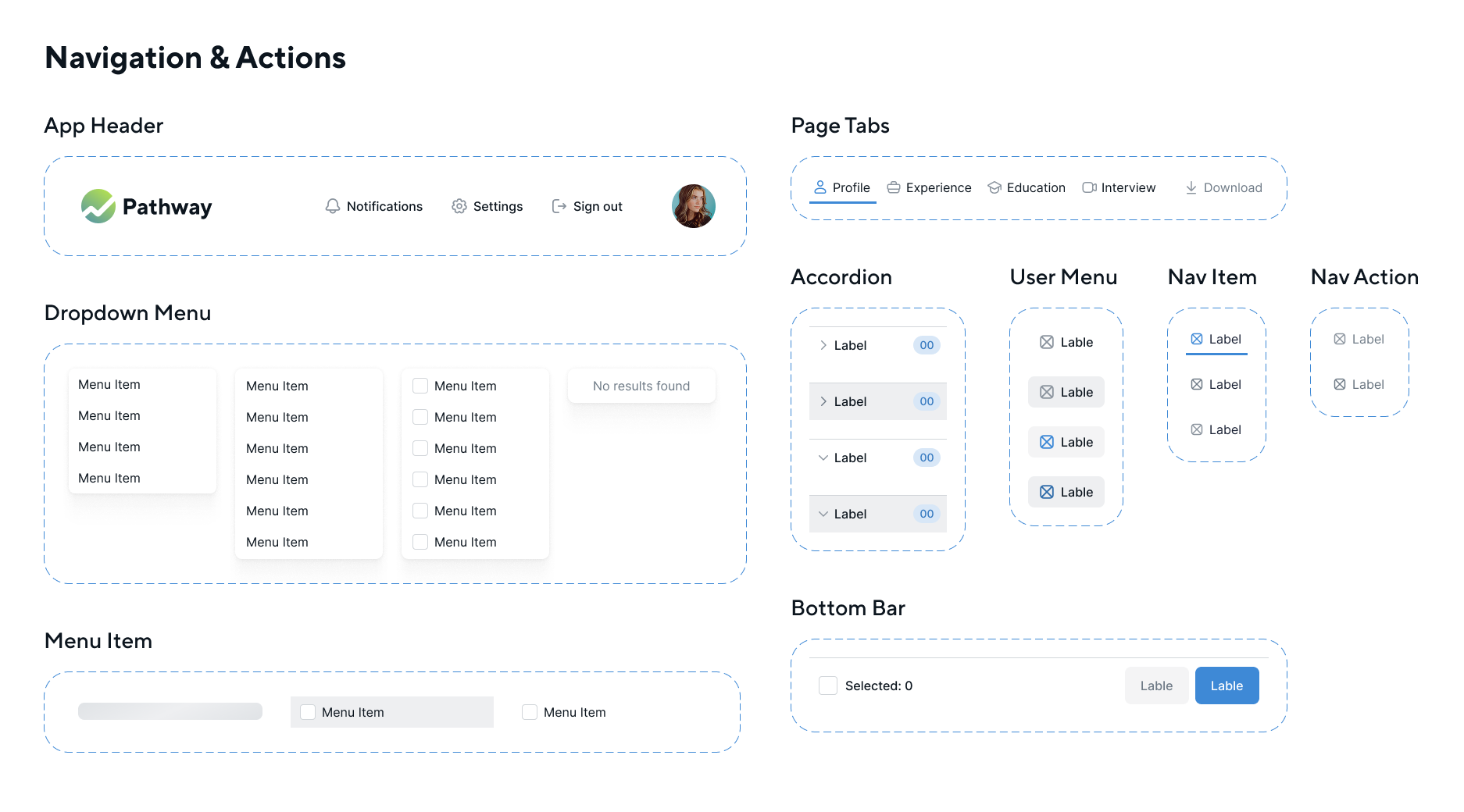
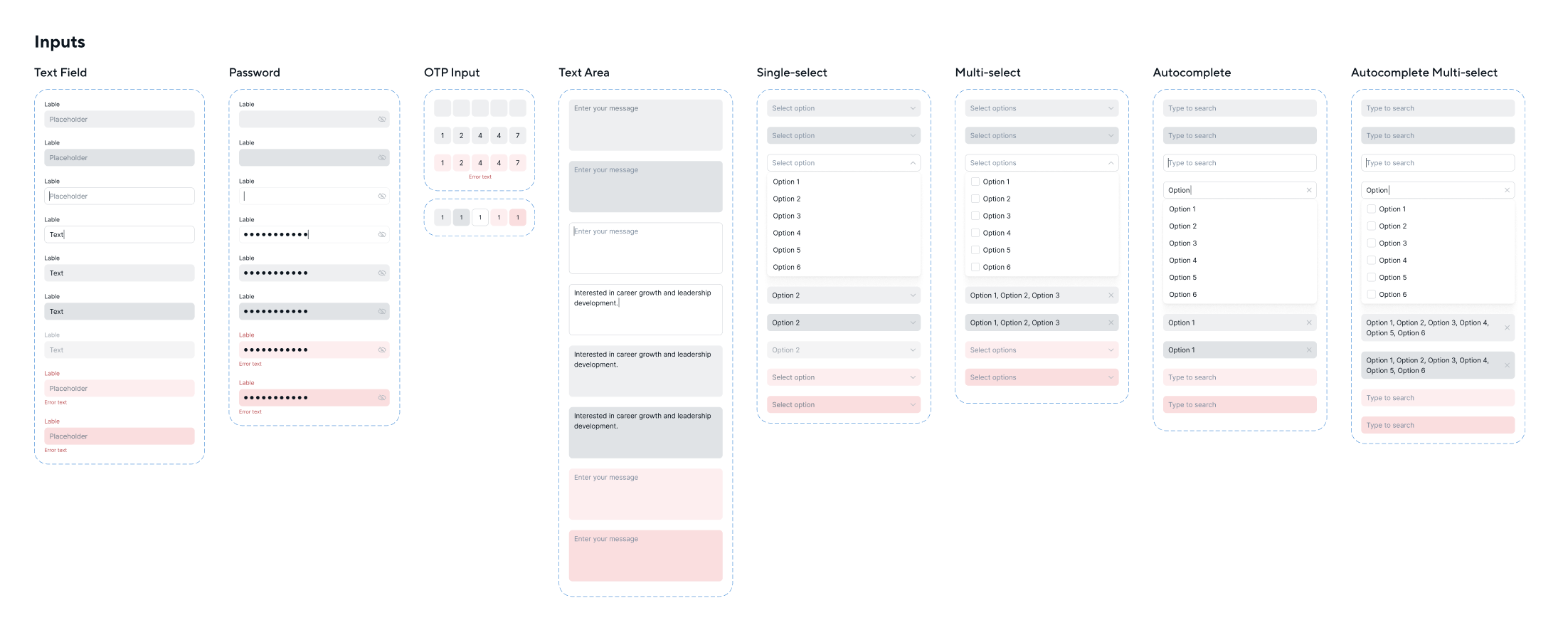
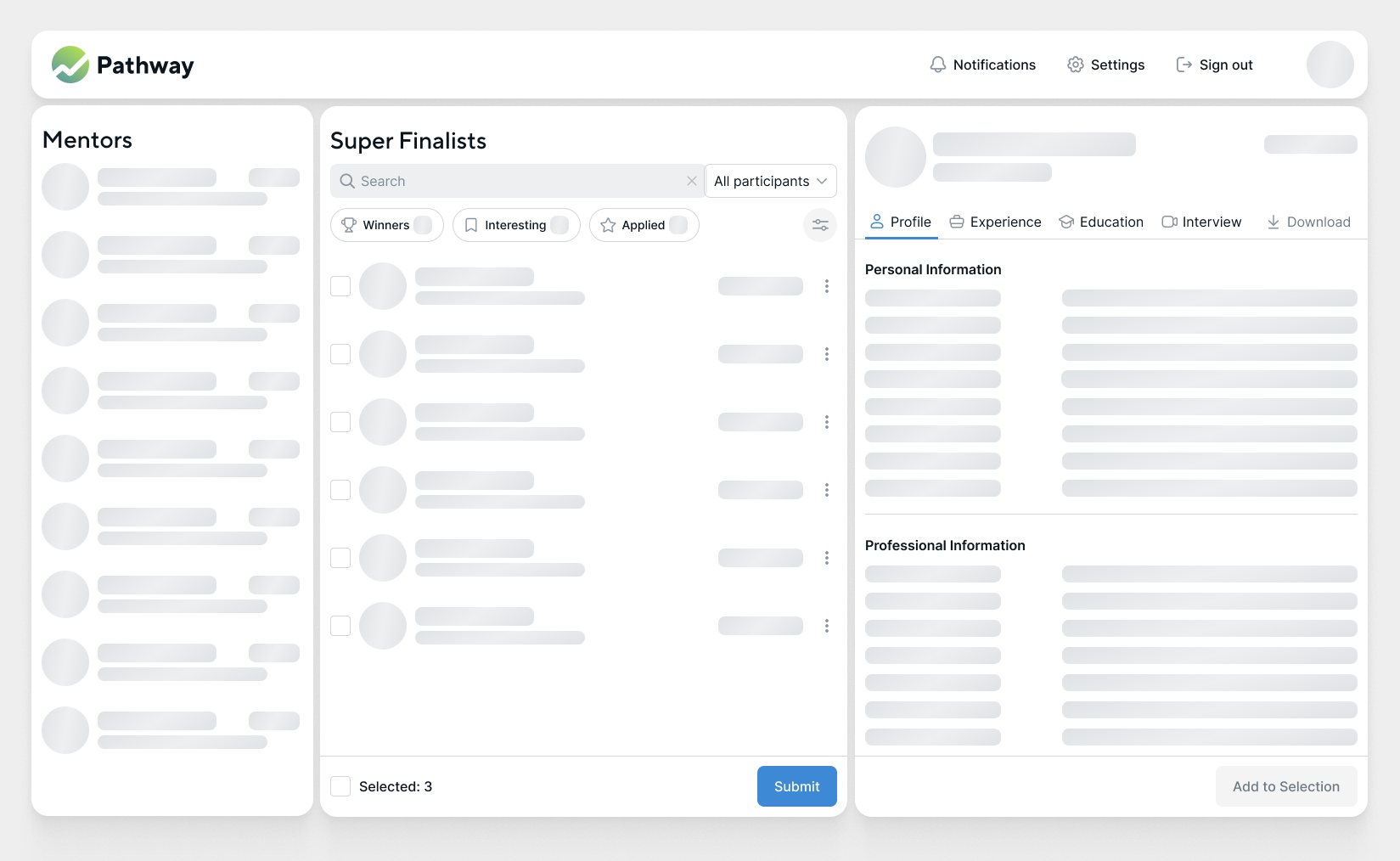
I structured a scalable design system aligned with the role-based architecture, ensuring consistency in components, states, and navigation patterns.
Impact & Outcomes
- Removed ~40% of unused functionality
- Discontinued the unused mobile version
- Reduced entry friction via redesigned authentication
- Formalized role responsibilities and approval logic
- Reduced manual coordination processes
- Established a scalable architectural foundation
Pathway evolved from a loosely structured internal tool into a role-driven decision system.
